(This article is also availabe in a longer version in Catalan here)
My father, José María Arrufat Rodríguez, Jose from now on, passed away last Saturday, April 4th, after a two-year illness that worsened rapidly over the last five weeks.
My father was neither a politician, nor a doctor, nor a businessman, nor an artist, nor did he have any other profession for which a person’s legacy is publicly remembered after death. Throughout his life—born on June 11, 1953, and starting work as a teenager until his retirement in 2019—he never needed a LinkedIn profile, nor to build a personal brand, nor did anyone consider him relevant enough to have a Wikipedia page; needless to say, he was not concerned about the emergence of AI and how it might help or take away our jobs. And yet, he had a vital passion for staying informed about everything happening in the world.
But he was my father, and I would not be who I am without him. That is why I want to write these lines in his memory, in a similar spirit to what I wrote when his grandson, Màrius, was born a few months ago. Because I know he would have liked it, I have decided to write this piece as a kind of digital legacy for him. I cannot stop thinking about everything he has done for me, for my sister, and for my mother, while I reflect on how he may have been fortunate to live in a much better world than the one I will face from now on, linking each part of this article to a specific period in history.
Being Born and Growing Up in a City Devastated by the Spanish Civil War (1953–1975)
Jose was born in a city, Tortosa, that had been up to 80% destroyed by the war that had ended 14 years earlier. In 1953, the city was still undergoing reconstruction under the Francoist “Regiones Devastadas” program, and it would take another six years before the implementation of the 1959 Francoist Stabilization Plan. Tortosa was, without a doubt, a city deeply under the francoist spirit of work, pray, obey and do not ever think about too much else.
My father was the son of José Ramón Arrufat Aguilar, originally from Lledó, in the Catalan speaking part of Eastern Aragon, from where he and his family had to flee during the persecutions at the end of the Civil War in 1939. My grandfather ended up in different small towns, before finally settling in Tortosa, where he worked as a laborer and met my paternal grandmother, Maria Cinta Rodríguez Cid. It could not have been easy for him, especially considering that one of his brothers had to take refuge in France in 1939, and then hide from the Nazis due to his direct involvement with the Spanish Republican army. It was in this context that my father was born and raised.
Jose grew up in a house with a yard and animals, as an only child. When his high school years came, my grandfather caught him skipping classes and sent him to work as a teenager, without any formal training or specialization. At the end of the 1960s, there was no shortage of work in Spain, although the conditions and wages were another matter entirely.
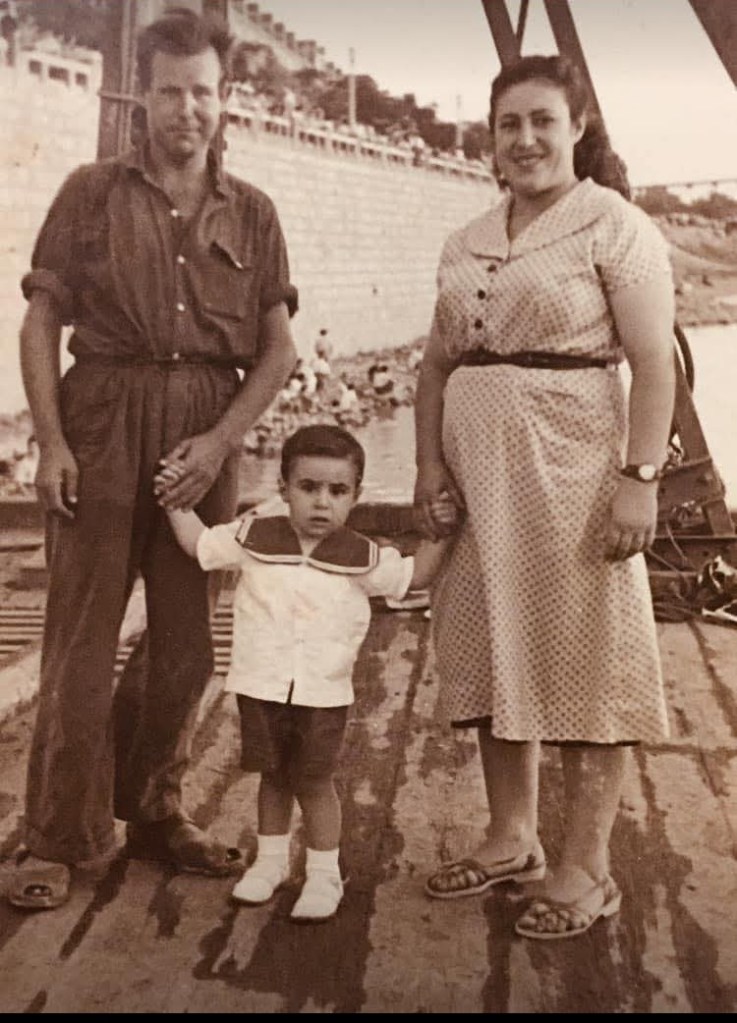
A few years later, he met my mother, Lourdes Agramunt Castelló, originally from a small town called Camarles in the Ebro Delta, 20 km away from Tortosa. My mother went to Tortosa to work in the fields, and it was there that my father met her and decided to take a very risky mission in that time — courting a girl from another town.
I know little about my father’s adventures in Camarles in the early 1970s. Let’s just say that a man from Camarles, whose name I do not remember, told me a few years ago, with more bitterness than arrogance: “If I had wanted to, your mother would be mine and you wouldn’t be here.” It truly seems that my father left his mark in Camarles. So proud.
Political Transition and Economic Crisis (1975–1986)
What I do know for certain is that my parents got married in 1975, at the age of 21 or 22, and went on their honeymoon to Mallorca. I still remember them telling me about it in the 1980s, when I was 6, 7, or 8 years old. Back then, traveling to Mallorca felt like a big adventure, as not everyone could afford to take a plane or a ferry. I would look at the photos from their honeymoon and think how wonderful it would be to get married just to be able to go to Mallorca. Thirty years later, when I got married and traveled to another island—Bali—I couldn’t help but think about how much the world had changed.
My parents got married just as Spain’s political transition was beginning, a period associated with a severe economic crisis that would last until 1982. There were no jobs anywhere around Tortosa, but my father was willing to go wherever necessary to earn money—and that’s exactly what he did.
They moved to live in Cullera, south of Valencia, where they stayed for a year. My father worked on the construction of the AP-7 motorway between Valencia and Alicante. Spain was modernizing rapidly, and there was no shortage of low-skilled work—although not in Tortosa—but these were jobs that involved heavy physical strain and where occupational safety measures were far from sophisticated.
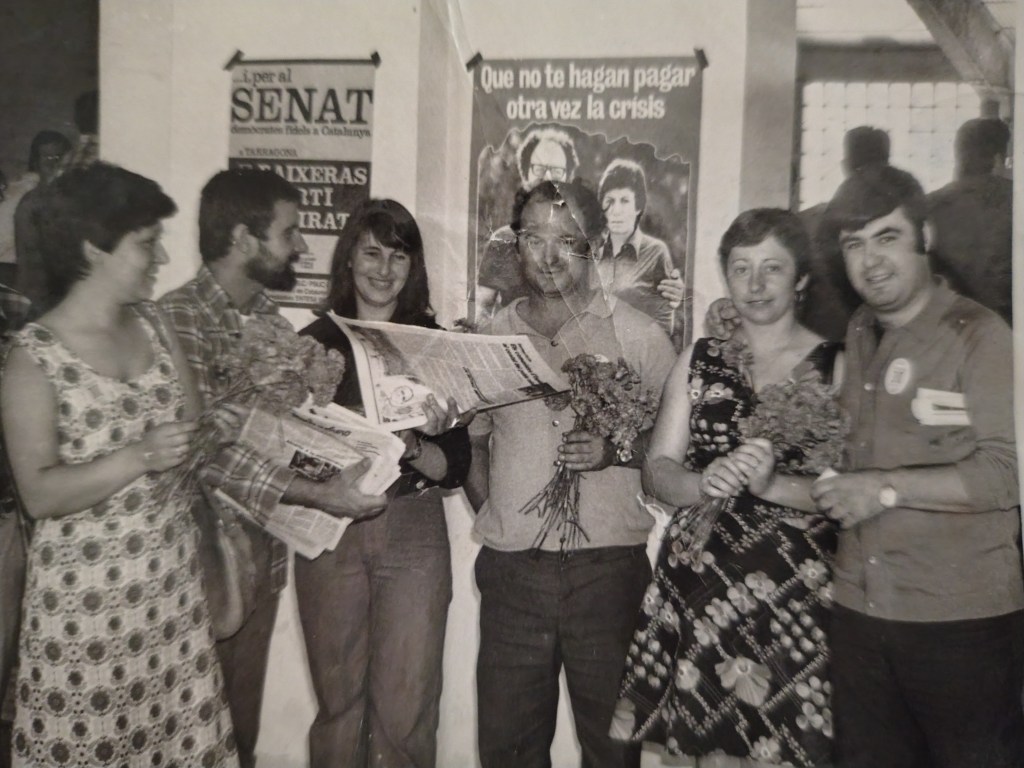
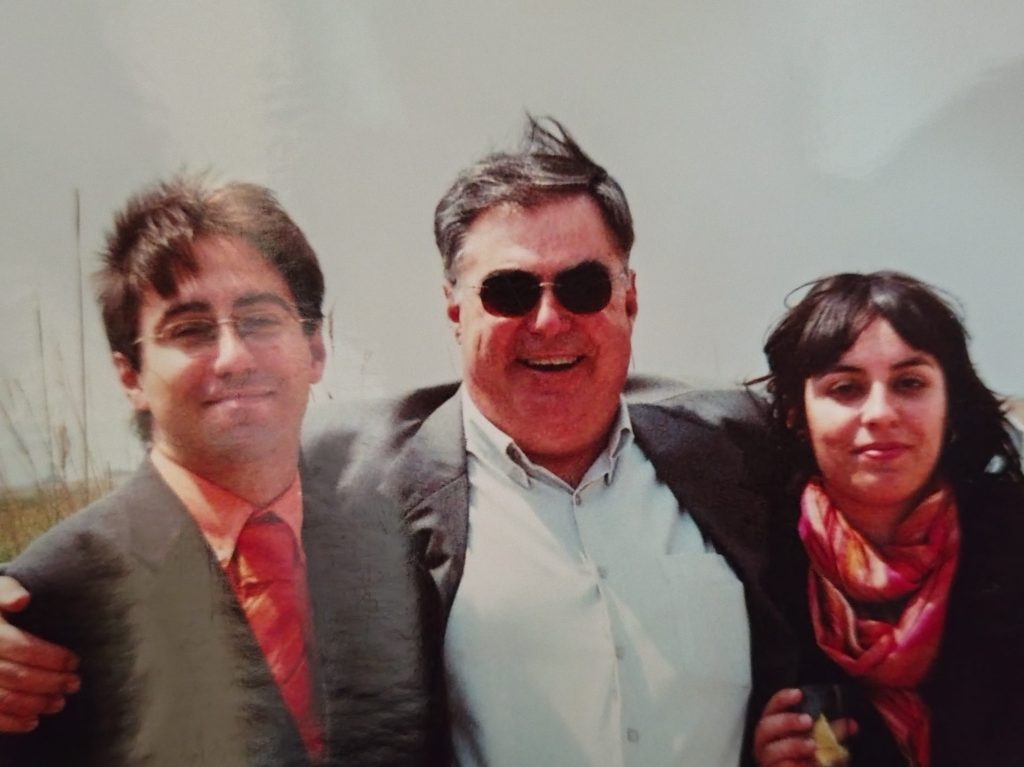
Upon returning to Tortosa in 1977, two significant things happened, as far as I am aware: these were the years of my father’s greatest political activity, and he began working as an electrician, despite having no formal training. These were the years of the political transition in Spain, and the first democratic elections were held that same year. Due to family background, my father became close to the PSUC (The Catalan branch of the Spanish Communist Party), as can be seen in the following photo. His involvement in politics did not last long, although he never stopped talking about it, always emphasizing how disappointed he had become. Even so, in his own way, just as he contributed his grain of sand to Spain’s economic development, he also contributed to democracy and social equality.
I was born in January 1979, and from that moment and throughout the 1980s, my parents’ lives would be linked to another town in the area, La Ràpita. A local family from La Ràpita, who owned the apartment where we lived for a time, took my parents and me in and made us part of their family. My mother always says that it was they who taught her how to raise me. When I think about those words, I reflect on the courage it took to be such young parents back then, without the knowledge our generation has today and with very different values when it comes to facing the decision of becoming parents.
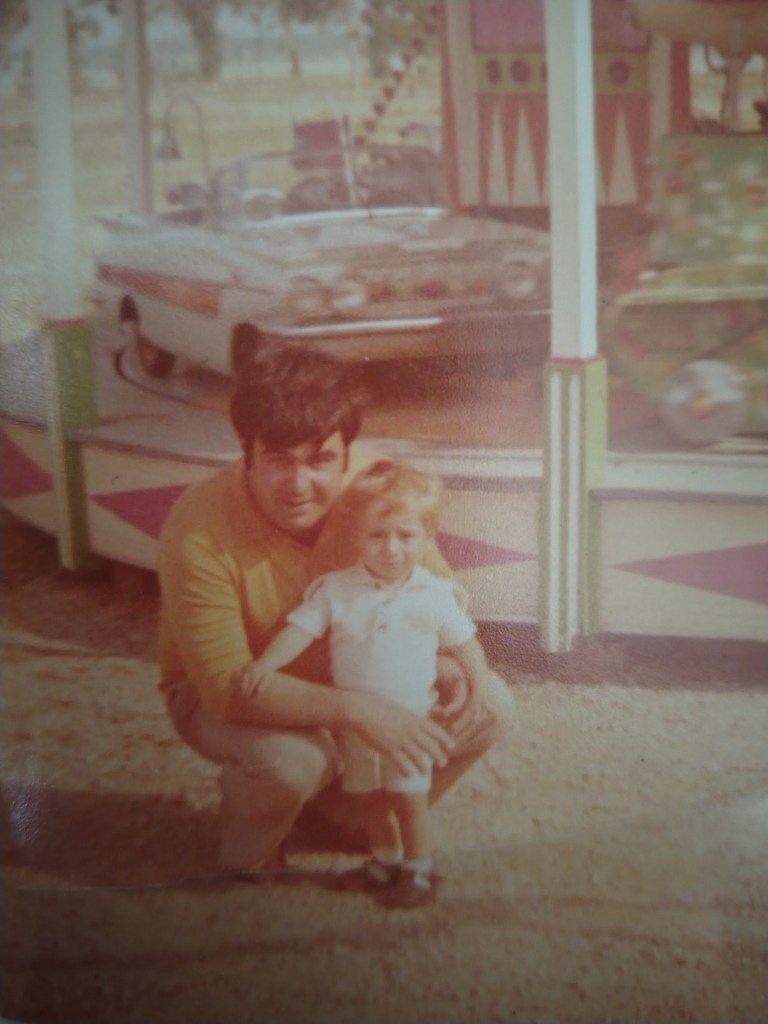
My childhood memories are therefore filled with the smell of fried prawns and fish stew aboard the boats of Jose’s fisherman friends from La Ràpita. At the same time, I have a vivid image etched in my mind: the helicopter that would take my father from the port of La Ràpita to a very well-paid but highly dangerous job—the “Amposta” oil platform, operated by the multinational Shell, off the coast of the Ebro Delta. Jose was thus part of the Catalan dream of having its own oil resources.
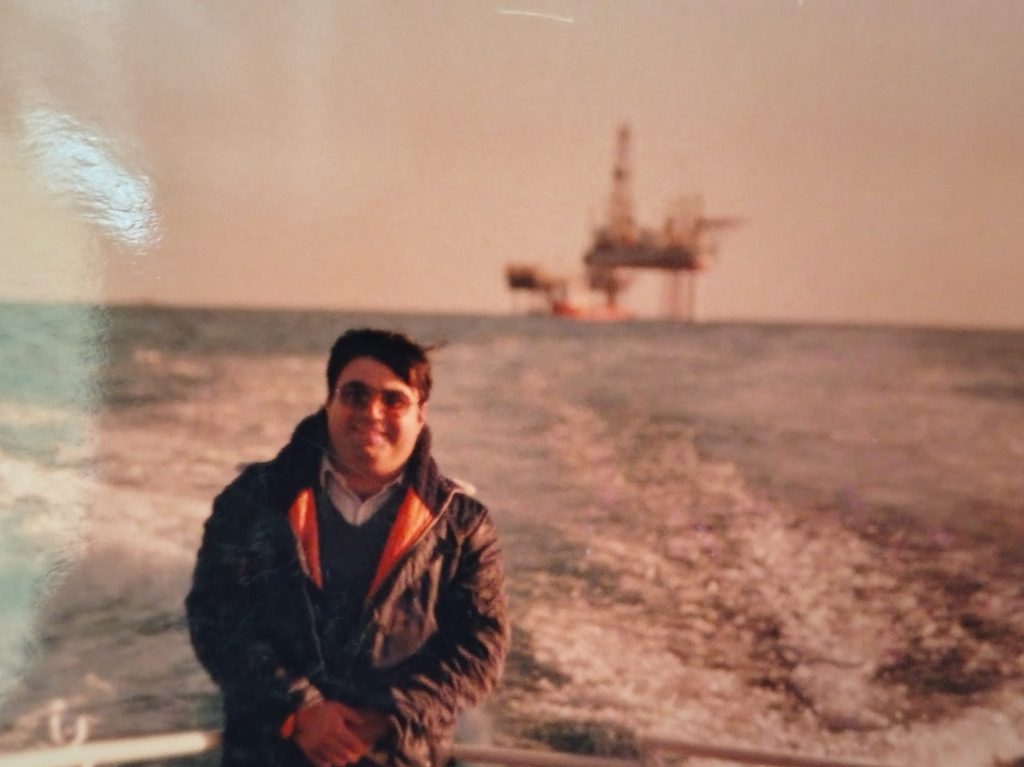
Until that dream came crashing down on August 15, 1984: one of his coworkers died in a workplace accident, and my father was injured and taken to hospital.
It was at that moment, at six years old, that I realized how lucky I was to have a father. A child my age had just lost his.
From Spain’s Entry into the European Union (1986) to 1997
From that point on, I remember an even more active period in my father’s life. After finishing his experience in the oil industry, Jose felt empowered to do anything. He had learned a great deal, met people from all over Europe, and had built a solid network of contacts in the naval sector in La Ràpita. It was then that he decided to become a small entrepreneur, opening a modest workshop in La Ràpita with some former colleagues. The timing seemed right: Spain had just joined the European Union, and there was a sense of optimism in the air.
The business venture does not seem to have gone very well, and from then on he chose to remain an employee, but another decision of his left a deep impression on me, probably the most important one.
At around 30 years old, Jose decided to go back to studying vocational training—something he had not wanted to do 15 years earlier. My presence, and that of my sister from late 1983 onwards, somehow motivated him. I remember the second half of the 1980s as a time when my father would come home late at night and shut himself away to work on technical drawing, study mathematics or Catalan, or even a subject that, at that time in Tortosa, hardly any adult knew: English language. Then he would wake up early the next morning to go to work. I could do nothing but admire him in silence.
From then on, I continued growing and pursuing my education, while Jose also kept studying and reminding me—when I began at Pompeu Fabra University in 1997—that no one in our family had ever attended university. I remember those years as a time of optimism, both in my immediate surroundings and globally.
Jose went on to work for a well-known construction company in Tortosa and later, thanks to his further training, moved into the field of gas installations. He eventually ended his working life at a well-known plastics manufacturing company based in Tortosa, where he was responsible for industrial maintenance. At the funeral home, seven years after his retirement, his former coworkers were still telling me: “Even today we say that if Arrufat were here, this machine would already be fixed.”
A lifetime of work, always thinking about leaving a better future for his two children.
Jose’s Legacy. From 1997 to the Present
Beyond my university studies, my father always supported me in every decision I made, limiting himself to offering timely advice when he felt it was necessary.
With him, I always felt like I did when I learned to ride a bicycle: I was riding on my own, and he was watching me from a distance, trusting me.
Before university, I spent two summers in Ireland to learn English. Despite the financial cost—and even though it was a luxury at the time that very few families in Tortosa could afford—we agreed that I would go in exchange for not asking him for a motorbike, as many teenagers in Tortosa did back then. Instead, I learned to get around the city by bicycle like few others my age, earning myself the label of “weirdo.” My parents trusted me, and I accepted the consequences.
I was able to spend six months on an Erasmus exchange at Sciences Po in Paris in 2001, when many of my classmates did not even consider it an option, despite the high cost—albeit partially offset by the generous support the French government provided for accommodation, food, and transport.
When my final year at Pompeu Fabra University became complicated due to a cursed subject in September, he never questioned my decision to spend a year working in Scotland to improve my English. I stayed there for six months without returning to Tortosa even once, as low-cost flights were only just beginning to emerge, and traveling back from Scotland was not the same as returning from Paris.
He showed strength—both of us did—when in 2004 ICEX assigned me to a posting that very few trainees wanted: Algiers, the capital of Algeria, given the country’s recent violent history. He believed in me and helped me buy my first car, second-hand, so I could get around the narrow streets of that steep city—a car with Barcelona plates driving through a place where, until very recently, foreigners had been prime targets for terrorists.
Later, when I said that I still lacked enough international experience and decided to move to Morocco, where I would stay for almost two more years, he raised no objections.
And when I finally settled professionally in Catalonia and, at the age of 30, introduced my parents to the woman who is now my wife, Kristina, from Lithuania, they believed in me as well. I still remember him sharing an ice cream with her the day they met, as if they knew each other since a long time ago.
Jose suffered when he saw me suffer after I lost my job in 2018 as a result of the application of Article 155 of the Spanish constitution in Catalonia, which had direct consequences for my workplace—but deep down, he knew I would pull through.
He also suffered—so much that he cried and became overwhelmed, though he never told me—on two earlier occasions: when, at the age of nine, I fell ill with a condition that required immediate treatment but fortunately left no lasting effects; and when, at 25 and living in Madrid, the Atocha terrorist attacks took place in March 2004, and he feared I might have been on one of those trains. Jose was my hero, but he was human, even if he never showed it to me.
I cannot hide it—I am not as strong as he was, and I am crying as I write this. If I have lived such a happy life—at least until now—it has been mainly thanks to him and my mother. With the feeling that this would not last forever, when I published my book in 2022, thinking that perhaps I would never publish another, I knew I had to dedicate it to them, because without them “there would be no paths to walk,” as I have been fortunate enough to do.
My father was a man who, with his small grain of sand, helped make the world a better place—setting an example for his children, showing how to do things well, working, studying, engaging with democracy. But if that were not enough, he loved life. He radiated joy and good humor with everyone he met, going out with his friends for hearty breakfasts until the very end, because “once I’m in the coffin, I won’t be able to.” And that is how I will always remember him: with your vitality, dad, and your ability to overcome adversity. My challenge now is to be as good to Màrius, my son, as you were to me.
Wherever you are, rest in peace.

 Jordi Arrufat Agramunt